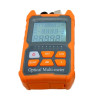
Optical Fiber Visual Fault Locator (VFL) 20mW VFL
Optical Fiber Visual Fault Locator (VFL) with a 20mW output is a device used to detect faults, such as breaks, bends, or poor connections, in optical fiber cables by emitting visible red light. Here's a detailed description of the features and functionalities of a 20mW VFL:
Key Features:
Power Output (20mW):
20mW refers to the power output of the VFL, which is the amount of light emitted from the device. The higher the mW rating, the more visible the light is, which helps with detecting faults, especially over longer distances or in environments with some ambient light.
20mW is a moderate level of power suitable for most fiber optic applications, providing sufficient visibility for fault detection without being too intense or difficult to handle.
Visible Light Emission (Typically 650nm Red):
The VFL typically emits visible red light with a wavelength around 650nm. This red light is highly visible to the human eye, making it easier to spot faults such as cracks, breaks, and bends in the fiber cable. The light is emitted through the fiber, and when a fault occurs, the light will escape, revealing the location of the issue.
Wavelength:
650nm wavelength is standard for most VFLs, providing good visibility while ensuring compatibility with a wide range of fiber optic cables, including single-mode and multi-mode fibers.
Compact and Portable:
VFLs are typically lightweight and ergonomic, making them easy to handle, carry, and use in field environments.
They are often designed to be pocket-sized, allowing fiber technicians to carry them easily while working on-site.
Visual Fault Detection:
The primary function of the VFL is to detect faults in optical fiber cables by shining visible light through the fiber. Faults such as breaks, bends, or loose connectors will cause the light to leak out, indicating a potential problem.
This makes it an essential tool for fiber optic installation, maintenance, and troubleshooting.
Long Battery Life:
Most VFLs operate on battery power, and a 20mW model will typically offer long operational times between charges or battery changes, making it convenient for fieldwork.
Battery life is crucial, especially for technicians who need to rely on the VFL throughout the day in remote or outdoor locations.
Easy Operation:
VFLs usually feature simple one-button operation, making them user-friendly and intuitive. Technicians can quickly turn the device on and start using it for fault detection.
No need for advanced training to operate the VFL, making it a straightforward tool for both novice and experienced fiber technicians.
Application Range:
20mW VFLs can detect faults over various distances, typically up to 5 km for outdoor fiber systems, depending on the quality of the fiber and environmental conditions.
They are suitable for both single-mode and multi-mode fibers, making them versatile for different fiber installations.
How It Works:
- Connect the Fiber: Insert one end of the fiber optic cable into the VFL's port.
- Activate the Device: Turn on the VFL, and the 20mW laser or LED will shine visible red light through the fiber.
- Inspect for Leaks: Visually inspect the fiber for any light leakage, which indicates a fault (such as a crack, bend, or break in the cable).
- Pinpoint the Fault: Once the technician spots the leaking light, they can quickly pinpoint the location of the fault and take corrective actions, such as re-splicing or replacing the damaged fiber.
- Advantages of a 20mW VFL:
- Effective Detection: The 20mW power output ensures that the device provides enough light to detect faults even in longer fiber runs or environments with some ambient light.
- Versatility: It works well for both indoor and outdoor fiber installations.
- Quick Troubleshooting: Helps technicians quickly find physical problems in fiber cables, which is crucial for minimizing downtime and ensuring network reliability.
Applications:
- Fiber Optic Installations: Used during the setup of fiber networks to ensure that all cables are correctly installed and free of defects.
- Fiber Maintenance: Essential for diagnosing issues like broken or damaged fibers, poor connections, or misalignments in fiber optic systems.
- Testing & Troubleshooting: Ideal for checking the integrity of fiber optics, particularly in systems that are already in use, helping identify faults without complex testing equipment.


-476x476.jpg "Optical Fiber Visual Fault Locator (VFL) 20mW VFL")
-476x476h.jpg "Optical Fiber Visual Fault Locator (VFL) 20mW VFL")
-476x476.jpg "Optical Fiber Visual Fault Locator (VFL) 20mW VFL")
-476x476h.jpg "Optical Fiber Visual Fault Locator (VFL) 20mW VFL")
-476x476h.jpg "Optical Fiber Visual Fault Locator (VFL) 20mW VFL")
-476x476h.jpg "Optical Fiber Visual Fault Locator (VFL) 20mW VFL")


-80x80.jpg "Optical Fiber Visual Fault Locator (VFL) 20mW VFL")
-80x80h.jpg "Optical Fiber Visual Fault Locator (VFL) 20mW VFL")
-80x80.jpg "Optical Fiber Visual Fault Locator (VFL) 20mW VFL")
-80x80h.jpg "Optical Fiber Visual Fault Locator (VFL) 20mW VFL")
-80x80h.jpg "Optical Fiber Visual Fault Locator (VFL) 20mW VFL")
-80x80h.jpg "Optical Fiber Visual Fault Locator (VFL) 20mW VFL")